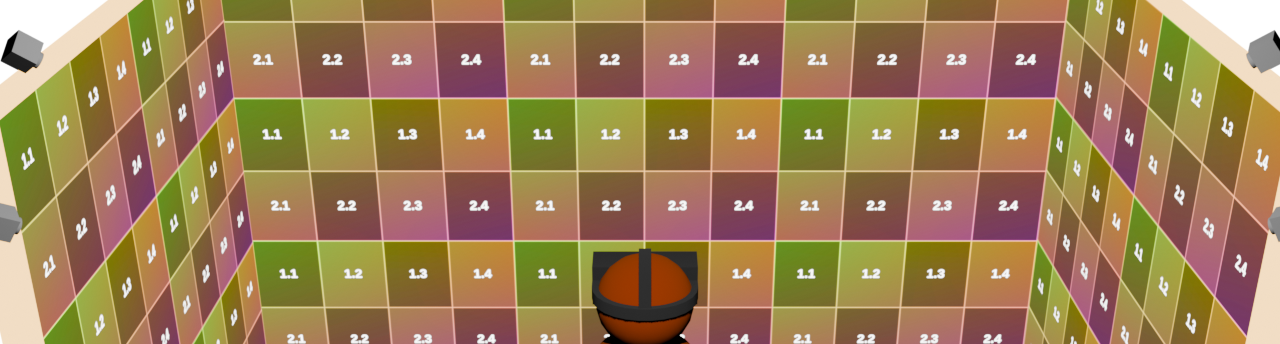
Meta Reality Labs VR/AR CAVE
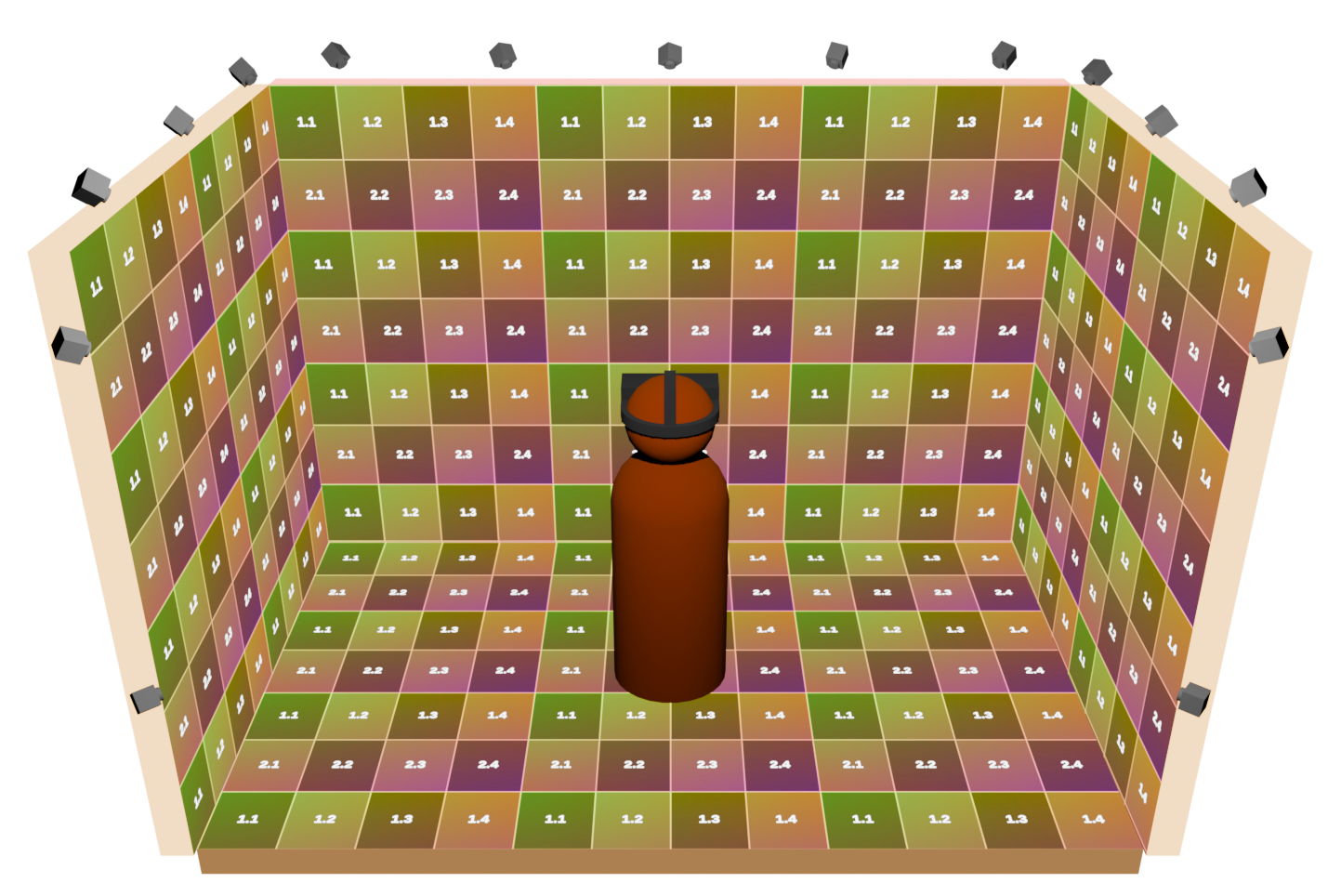
In 2024 and 2025, I worked at Meta Reality Labs as a contingent worker under Pixela as a software engineer developing and maintaining their CAVE setup. CAVEs are essentially stages with displays on the floor and walls and motion capture for the user that can be used for a wide range of VR applications. This CAVE in particular was designed to be bleeding edge and capable of simulating arbitrary hardware for prototyping consumer VR/AR HMDs, allowing for rapid, low cost design iteration and user feedback.
On the operations team for this CAVE, we largely worked with researchers and engineers from other teams who were developing hardware VR/AR prototypes. A Unity or Unreal simulation of the hardware could be loaded on the CAVE, allowing quick and easy demonstration of the hardware characteristics of these projects, along with the ability to adjust them on demand. For example, this could include testing different HMD FOVs, optical behavior of lens geometry, performance in ambient light in different scenarios, or mixed reality performance with physical props and furniture. This obviates the need for producing expensive intermediary hardware prototypes.
My role specifically was fairly spread between helping other teams realize their projects in the CAVE ecosystem, maintaining the render cluster and corresponding infrastructure, and giving demonstrations to groups and individuals coming through to see the technology. I helped dial in parameters for testing/display based on user requirements and feedback, as well as consult on adapting new projects to the platform.
As a complex cluster system with lots of moving parts running with very tight tolerances, maintaining and operating it was non-trivial. To this end, I worked on cluster management tools in Python and PowerShell, standardized system setup procedures, and validating updates to middleware and drivers across machines, in addition to a wide variety of hardware and software IT work.
Some broad (hopefully non-NDA violating) specs of the CAVE in question, for those curious about its performance or complexity:
- Capable of 240Hz mono or 120Hz stereo operation with active shutter glasses
- Stage with high density, high contrast LED panels on the floor and three walls, several meters on a side
- Compute cluster consisting of ten render nodes and one control node, all with high performance Xeon CPUs and Quadro GPUs, networked with 100Gb InfiniBand
- Fifteen 240Hz motion capture cameras for full tracking of HMD and props
- Capable of simulating both dark shadows and bright daytime sun at the same time